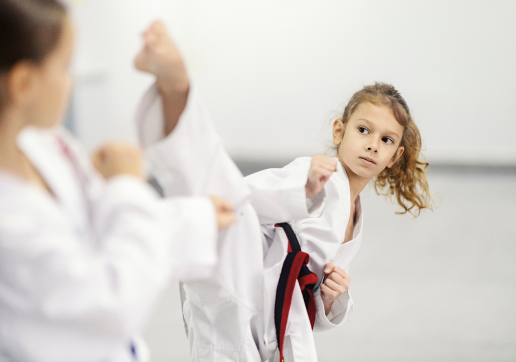
The best time to start Taekwondo is young. Our Kids Program introduces children aged 5 to 11 to the world of Taekwondo through age-appropriate classes that are as fun as they are developmental.
CURRICULUM
Each Kids class at ATTA is structured to develop children holistically — physically, mentally and socially.
WHY TAEKWONDO
Unlike many children’s sports, Taekwondo provides a structured progression system — the belt system — that gives children clear, meaningful goals and a visible record of their own growth.
PROGRESSION
Unlike many children’s sports, Taekwondo provides a structured progression system — the belt system — that gives children clear, meaningful goals and a visible record of their own growth.
Every transition is a milestone.
COMMON QUESTIONS
We welcome children from age 5 in our Kids Program. At this age, classes are movement-focused, fun, and developmentally appropriate — introducing Taekwondo concepts through games, challenges and repetition rather than formal technique.
Absolutely. Every student begins at white belt, and our instructors are experienced in welcoming complete beginners. Many of our kids join with no martial arts background at all and progress quickly with encouragement and consistent attendance.
Yes. Our Kids classes are designed with age-appropriate safety in mind. Physical contact is minimal and carefully supervised for the younger age groups, increasing gradually as children develop skill and maturity. Full sparring equipment is introduced only when students are technically ready and emotionally prepared.
If your child can follow basic instructions and is interested in physical activity, they are likely ready. We recommend coming in to observe a class first — seeing what the sessions involve is the best way to judge fit. We also offer a free trial class so your child can experience it before you commit.
Many parents report improvements in focus, listening skills, and behaviour at school after their children start Taekwondo. The structured nature of classes — where listening, responding appropriately, and self-regulating are required — builds exactly the habits that support academic and social success.